



Magnetic powder and fluorescence: developing and beautifying industrial components once
Dothing Information Department2025-10-18507 Views
In the field of industrial non-destructive testing, magnetic particle testing and fluorescent penetrant testing are like two doctors each with their own unique skills, specifically responsible for conducting "surface health checks" on metal components, leaving no place for the naked eye to hide tiny defects. Although they share the same goal, their principles and application scenarios are quite different.
Magnetic particle testing: A development technique "customized" for ferromagnetic materials
Magnetic particle testing is specifically designed for ferromagnetic materials such as iron, cobalt and nickel. The principle is similar to establishing an artificial magnetic field for a workpiece: when the workpiece is magnetized, if there are defects such as cracks or pores on the surface or near the surface, the magnetic field lines will be distorted, and a local "leakage magnetic field" will be formed. At this point, if a tiny amount of magnetic powder is sprinkled, it will be attracted by the leakage magnetic field and accumulate densely at the defect area, thus forming a clear visual indication under natural light.
● Advantages: Fast detection speed, low cost, extremely sensitive to linear defects (such as cracks), and can directly display the location and shape of the defects.
● Limitations: It can only detect ferromagnetic materials and is usually limited to surface and near-surface defects. After inspection, the workpiece needs to undergo demagnetization treatment.
Fluorescence penetrant testing: A "universal" beauty mirror for all solid materials
The application scope of fluorescent penetrant testing is much broader, almost applicable to all non-porous solid materials (such as aluminum alloys, titanium alloys, stainless steel, ceramics, etc.). It does not rely on magnetism but utilizes the principle of capillary action: a penetrant containing fluorescent dyes is applied to the surface of the workpiece, allowing it to seep into open surface defects. After removing the excess penetrant from the surface, apply the developer to adsorb the fluorescent liquid in the defect back to the surface. Under the irradiation of ultraviolet lamps (black light lamps), the fluorescent material at the defect area will emit a striking yellowish-green light.
● Advantages: It is not restricted by the magnetic properties of materials, can detect various metal and non-metal materials, and can identify extremely minute surface opening defects.
● Limitations: It can only detect surface opening defects, has extremely high requirements for cleanliness, and involves chemical reagents, so environmental protection and safety need to be noted.
Summary: A complementary golden pair
Which method to choose depends on the material of the workpiece and the detection target. Magnetic particle testing is an efficient "screening instrument" for magnetic material components such as steel, while fluorescence penetrant testing is a "beauty mirror" for inspecting the surface quality of various materials in high-precision fields such as aerospace and automobiles. The two together form the indispensable first line of defense in the quality control of industrial products, ensuring that key components are in perfect health before being put into use.

Dothing Technologies
Established in September 2006,Sales, and service of advanced X-ray digital imaging, non-destructive testing equipment Cutting-edge digital X-ray inspection solutions and integrating into their systems. World-leading non-destructive testing technology and products and relying on professional service team.Search
Latest News
Our products
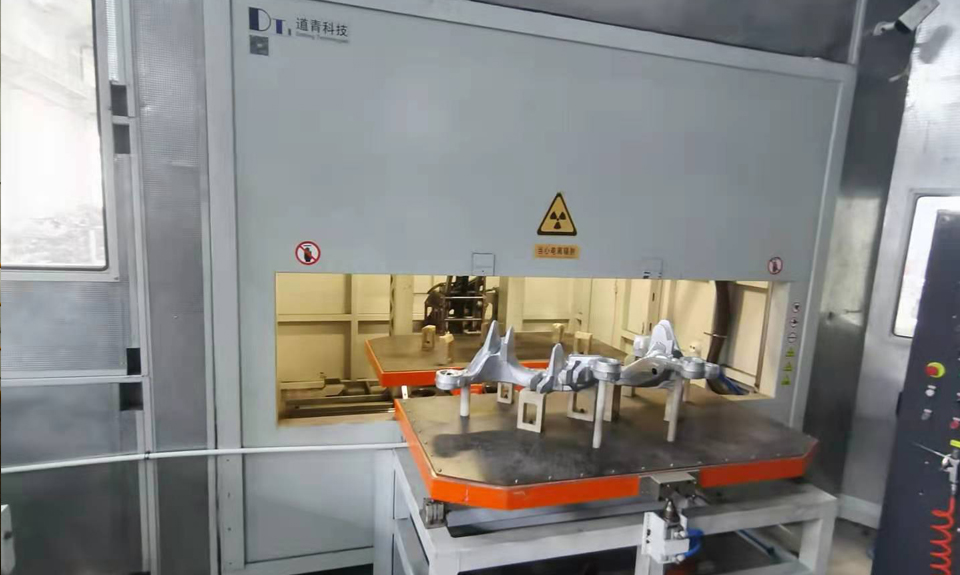
Integrated Large Die Casting X-ray Digital Imaging Detection System
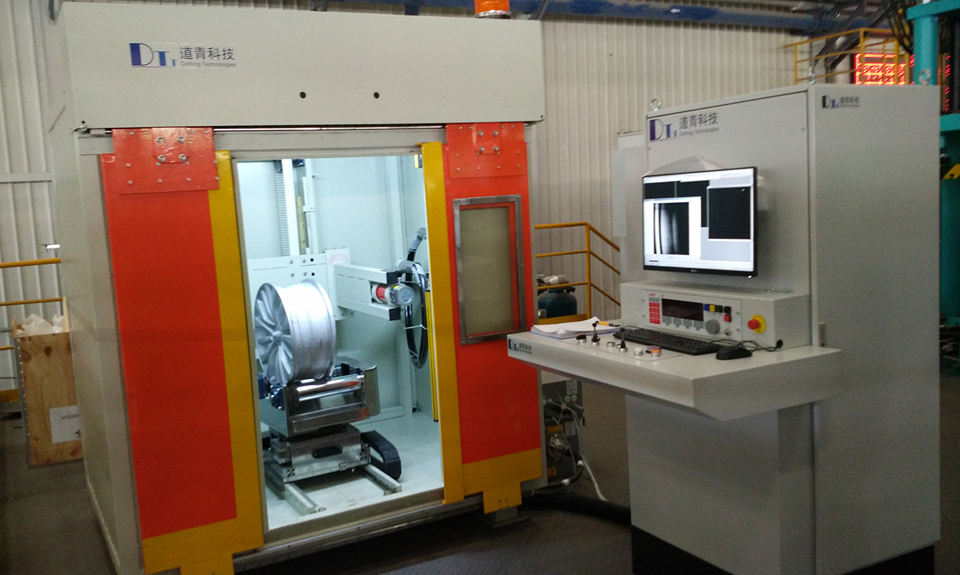
Semi-Automatic Wheel Hub X-Ray Inspection System
Fully Automatic Wheel X-Ray Inspection System
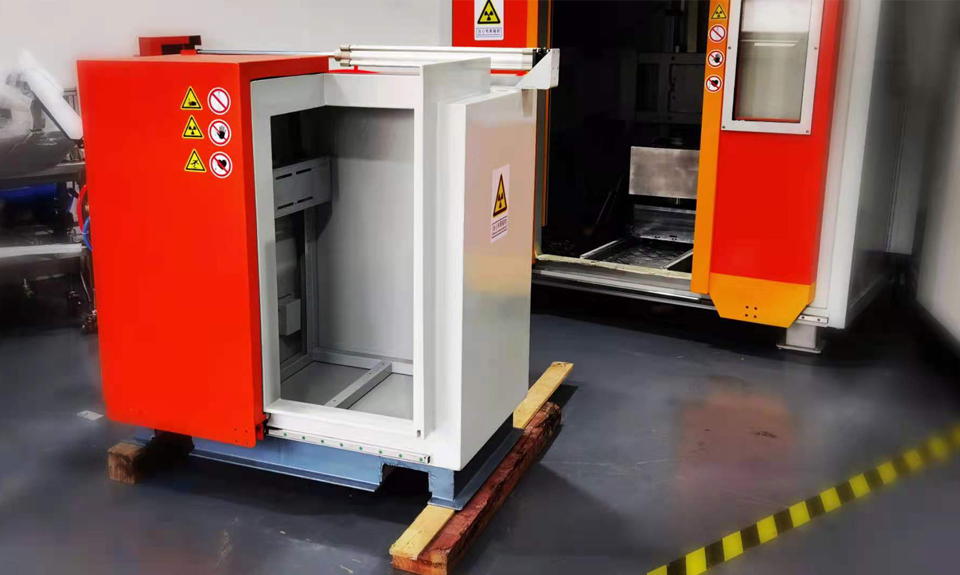
General Semi-Automatic X-Ray Inspection System
Steel Gas Cylinders Welding Seam X-Ray Inspection System
Small-Diameter Pipeline Welding Seam X-Ray Inspection System


